Weight Loss • Lipase Inhibitor • Clinically Proven

Buy Orlistat (Xenical) Online — Fast, Effective & Trusted Weight‑Loss Support

Orlistat (Xenical) helps block dietary fat absorption, supports steady weight reduction, and enhances long‑term results when paired with a structured diet. Get authentic, pharmacy‑grade Orlistat delivered discreetly and securely.

Orlistat Overview

Orlistat, widely recognized under the brand name Xenical, is one of the most established prescription weight‑management medications used to support clinically supervised weight‑loss programs. Unlike systemic appetite‑regulating treatments, Orlistat works locally within the digestive tract, offering a targeted and non‑stimulant approach to reducing calorie absorption.

Its primary mechanism involves blocking the activity of gastrointestinal lipases—enzymes responsible for breaking down dietary fats. By preventing a portion of consumed fat from being absorbed, Orlistat helps reduce total caloric intake, making it a valuable option for adults seeking structured, gradual, and sustainable weight reduction.

Orlistat is frequently incorporated into long‑term weight‑management strategies alongside calorie‑controlled diets, increased physical activity, and lifestyle adjustments. Clinical references highlight its role in supporting improvements in weight‑related markers such as waist circumference, lipid profiles, and metabolic parameters when used consistently over time.

Due to its non‑systemic nature, Orlistat is often considered by individuals looking for a weight‑loss medication that does not influence appetite hormones or central nervous system pathways. Its long safety record, broad availability, and well‑documented clinical profile contribute to its continued use as a first‑line pharmacologic option for obesity management.

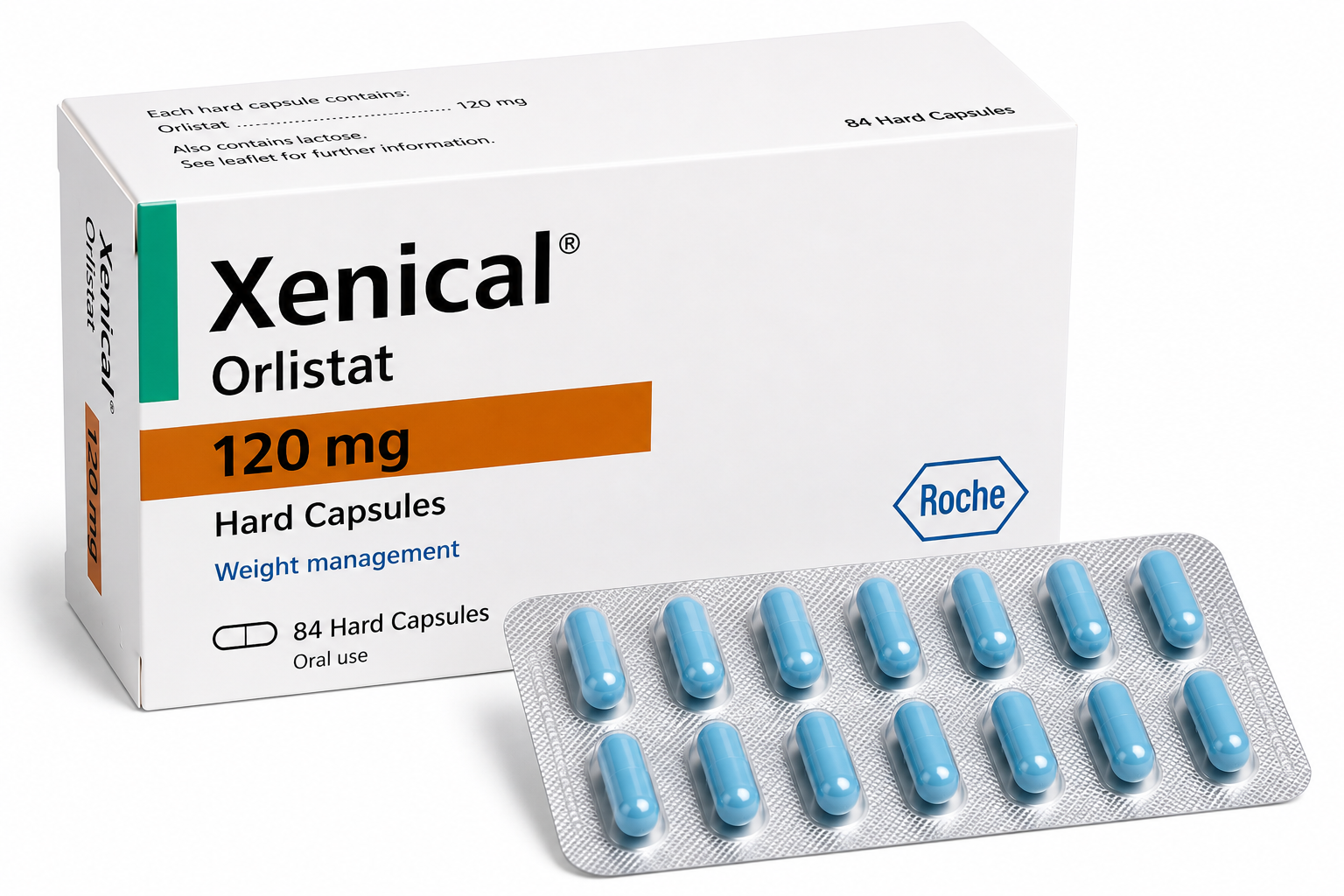
Orlistat Xenical Capsules

What is Orlistat?

Orlistat is an FDA‑approved lipase inhibitor used for chronic weight management in adults seeking structured, clinically supported weight‑loss strategies. Known under the brand name Xenical, it is one of the most established pharmacologic options for reducing calorie intake without affecting appetite or central nervous system pathways.

Unlike systemic medications that influence hunger hormones or neurological signaling, Orlistat works locally in the stomach and intestines. Its mechanism centers on blocking gastrointestinal lipases—enzymes responsible for breaking down dietary fats—thereby preventing a portion of consumed fat from being absorbed and contributing to total caloric load.

Because Orlistat acts within the digestive tract, it is often selected by individuals looking for a non‑stimulant, non‑hormonal weight‑loss option with a long safety record. When combined with a reduced‑calorie diet and lifestyle adjustments, Orlistat may support gradual, sustainable weight reduction and improvements in weight‑related health markers such as lipid profiles and waist circumference.

Quick Facts

  • Brand name: Xenical
  • Drug class: Lipase inhibitor
  • Primary action: Blocks dietary fat absorption
  • Where it works: Digestive tract (non‑systemic)
  • Form: Oral capsules
  • Use case: Long‑term weight management
  • Key benefit: Non‑stimulant, appetite‑neutral mechanism

Key Benefits of Orlistat

Blocks Fat Absorption

Orlistat reduces total calorie intake by blocking gastrointestinal lipases, preventing a portion of dietary fat from being absorbed. This non‑systemic mechanism supports gradual, structured weight reduction without affecting appetite or metabolic hormones.

Long‑Term Weight Management

Orlistat is suitable for ongoing use as part of a clinically supervised weight‑management plan. When combined with a calorie‑controlled diet and lifestyle adjustments, it may help improve weight‑related markers such as waist circumference and lipid profiles over time.

Non‑Stimulant & Non‑Hormonal

Unlike appetite suppressants or hormone‑modulating treatments, Orlistat works locally in the digestive tract and does not influence the central nervous system. This makes it a preferred option for individuals seeking a stimulant‑free, appetite‑neutral weight‑loss approach.

How Orlistat Works

Orlistat, known under the brand name Xenical, works through a targeted gastrointestinal mechanism that focuses on reducing the absorption of dietary fat. Unlike systemic weight‑loss medications that influence appetite or metabolic hormones, Orlistat acts locally within the digestive tract.

Its primary action involves blocking pancreatic and gastric lipase enzymes—the enzymes responsible for breaking down triglycerides into absorbable fatty acids. When these enzymes are inhibited, a portion of consumed fat remains undigested and is naturally eliminated from the body rather than absorbed.

By reducing the amount of fat absorbed from meals, Orlistat helps lower total caloric intake, supporting gradual and structured weight reduction. When paired with a calorie‑controlled diet and lifestyle adjustments, this mechanism may contribute to improvements in weight‑related health markers over time.

Mechanism Flow

🍽️
Dietary Fat Intake Fat enters the digestive tract with meals.
🧪
Lipase Enzymes Pancreatic and gastric lipases normally break down fat.
🛡️
Orlistat Action Orlistat inhibits lipase activity in the gut.
⬇️
Reduced Fat Absorption Part of dietary fat is not absorbed and leaves the body.

Orlistat Dosages

Orlistat (sold as Xenical and in over‑the‑counter formulations) is available in two primary strengths. The 120 mg capsule is a prescription‑only option, while the 60 mg capsule is offered as an OTC (over‑the‑counter) version for adults seeking a non‑prescription weight‑management aid.

Strength Form Availability Notes
120 mg Capsule Prescription (Xenical) Used in clinically supervised weight‑management programs. Non‑systemic mechanism; blocks dietary fat absorption.
60 mg Capsule OTC (Over‑the‑Counter) Available without prescription for adults seeking structured weight‑loss support. Works through the same lipase‑inhibition mechanism as prescription Orlistat.

Both strengths use the same core mechanism—blocking gastrointestinal lipases to reduce dietary fat absorption. The prescription 120 mg version is typically used in more structured weight‑management plans, while the OTC 60 mg option provides broader accessibility for adults beginning a weight‑loss program with lifestyle adjustments.

Orlistat Dosage FAQ

The 120 mg strength is the prescription version (Xenical), while the 60 mg strength is available OTC. Both use the same lipase‑inhibition mechanism, but the prescription dose is typically used in structured weight‑management programs.

Both contain the same active ingredient—Orlistat—and work through the same mechanism. The difference is the strength and availability: Xenical is 120 mg (prescription), while the OTC version is 60 mg.

The dual‑strength system allows Orlistat to be used in both clinically supervised programs (120 mg) and general weight‑management settings (60 mg OTC). Both strengths support reduced fat absorption.

Yes. Both 120 mg and 60 mg Orlistat inhibit gastrointestinal lipases, reducing the amount of dietary fat absorbed. The difference lies in dosage intensity and availability.

How to Take Orlistat

Orlistat (including prescription Xenical 120 mg and OTC 60 mg formulations) is typically taken alongside meals that contain dietary fat. Its effectiveness depends on timing and consistency, as the medication works locally in the digestive tract during fat digestion.

  • Take with meals containing fat — Orlistat blocks lipase enzymes only when fat is present.
  • Up to three times daily — usually with breakfast, lunch, and dinner.
  • Skip the dose if you skip the meal — especially if the meal contains little or no fat.
  • Follow dietary recommendations — balanced, reduced‑calorie meals improve tolerability.
  • Stay consistent — regular use supports gradual, structured weight‑management outcomes.

Important Notes

  • Low‑fat meals may help reduce digestive side effects.
  • Hydration is recommended as part of general weight‑management routines.
  • Multivitamin timing is often separated from Orlistat due to fat‑soluble vitamins.
  • Consistency supports better long‑term outcomes in structured programs.
  • Use as directed according to product labeling or clinical guidance.

Who Orlistat May Be Suitable For

Orlistat (including prescription Xenical 120 mg and OTC 60 mg) is commonly used in structured weight‑management programs. It may be considered by adults seeking a non‑systemic option that reduces dietary fat absorption without affecting appetite or central nervous system pathways.

  • Adults managing obesity as part of a long‑term weight‑management plan.
  • Individuals with excess body weight beginning lifestyle and dietary changes.
  • People seeking a non‑stimulant approach to weight management.
  • Those following reduced‑calorie diets where fat‑absorption reduction supports progress.

Who Should Avoid Orlistat

Due to its mechanism of reducing dietary fat absorption, Orlistat may not be appropriate for individuals with certain medical conditions affecting digestion or nutrient absorption.

  • People with chronic malabsorption syndromes, where nutrient uptake is impaired.
  • Individuals with cholestasis, a condition affecting bile flow and fat digestion.
  • Anyone with known hypersensitivity to Orlistat or capsule components.
  • Those advised to avoid fat‑absorption‑modifying agents due to underlying conditions.

Drug Interactions

Orlistat (including prescription Xenical 120 mg and OTC 60 mg) works by reducing dietary fat absorption in the digestive tract. Because of this mechanism, certain medications and fat‑soluble nutrients may require timing adjustments or additional monitoring.

Interactions are related to Orlistat’s effect on fat digestion rather than systemic activity, as the medication acts locally in the gastrointestinal tract. Product labeling typically includes timing recommendations for medications affected by fat absorption.

Warnings

Orlistat (including prescription Xenical 120 mg and OTC 60 mg) works by reducing the absorption of dietary fat in the digestive tract. Because of this mechanism, certain considerations may be relevant when incorporating Orlistat into a weight‑management plan.

  • Digestive effects are common — changes in fat absorption may lead to gastrointestinal effects, especially with high‑fat meals.
  • Balanced, reduced‑fat meals may help improve tolerability and support consistent use.
  • Medication timing may matter for individuals taking products affected by fat absorption (such as fat‑soluble vitamins or certain prescription medications).
  • Product labeling typically includes guidance on spacing Orlistat from other medications.
  • Use as directed according to prescription instructions or OTC product guidelines.

Side Effects of Orlistat

Orlistat (including prescription Xenical 120 mg and OTC 60 mg) works by reducing the absorption of dietary fat in the digestive tract. Because of this mechanism, gastrointestinal effects are among the most commonly reported experiences. Side effects may vary depending on meal composition and individual response.

Common Side Effects

Often related to unabsorbed dietary fat:

  • Oily or fatty stools
  • Urgent bowel movements
  • Increased gas, sometimes with discharge
  • Digestive discomfort such as bloating or soft stools

These effects are typically associated with higher‑fat meals due to Orlistat’s lipase‑inhibition mechanism.

Rare Side Effects

Less commonly reported effects include:

  • Liver‑related concerns such as changes in liver markers
  • Kidney stones associated with altered fat metabolism
  • Allergic reactions including rash or sensitivity

Rare effects are generally unrelated to meal composition and may involve individual sensitivity or underlying conditions.

Side effects are linked to Orlistat’s localized action in the gastrointestinal tract rather than systemic activity. Product labeling typically includes guidance on meal composition and usage patterns that may influence tolerability.

Orlistat Compared to Other Weight Loss Medications

Orlistat (Xenical) remains one of the most widely used non‑systemic weight‑loss medications. Below is a clear comparison with other popular options, highlighting mechanism differences, safety considerations, and typical use cases.

Orlistat vs Wegovy

Orlistat blocks dietary fat absorption directly in the gut, making it a non‑systemic option with a long safety record. Wegovy works through appetite regulation via GLP‑1 pathways and typically produces stronger weight‑loss outcomes but requires injections and ongoing dose titration.

Orlistat vs Phentermine

Orlistat is stimulant‑free and suitable for longer‑term use. Phentermine is an appetite suppressant with short‑term indications and stimulant‑related considerations. Orlistat is often preferred for individuals seeking a non‑central‑nervous‑system approach.

Orlistat vs Ozempic

Orlistat works locally in the digestive tract and does not affect appetite hormones. Ozempic (semaglutide) is a GLP‑1 agonist that reduces appetite and slows gastric emptying. Ozempic generally produces stronger weight‑loss results but requires injections and ongoing monitoring.

Orlistat vs Contrave

Orlistat is a single‑ingredient fat‑absorption blocker. Contrave combines bupropion and naltrexone to influence appetite and reward pathways. Orlistat avoids systemic neurological effects, while Contrave targets behavioral and appetite‑related mechanisms.

Orlistat vs Saxenda

Orlistat is taken orally and focuses on reducing fat absorption. Saxenda (liraglutide) is a daily injectable GLP‑1 agonist that reduces appetite. Saxenda often leads to greater weight‑loss outcomes but requires injections and dose escalation.

Orlistat vs Metformin

Orlistat is specifically designed for weight management by blocking fat absorption. Metformin is a glucose‑regulation medication sometimes associated with modest weight reduction. Orlistat provides a direct weight‑loss mechanism, while Metformin’s effects are secondary.

Orlistat (Xenical) Pricing Overview

Prices for Orlistat vary depending on strength (120 mg prescription Xenical vs. 60 mg OTC), quantity, and supplier. The table below provides a general comparison of common package formats.

Strength Package Type Typical Price Range
120 mg 30 capsules Prescription (Xenical) $XX–$XXX
120 mg 60 capsules Prescription (Xenical) $XX–$XXX
60 mg 60 capsules OTC Orlistat $XX–$XXX
60 mg 120 capsules OTC Orlistat $XX–$XXX

Prescription Xenical (120 mg) is typically priced higher than OTC Orlistat (60 mg) due to strength and regulatory classification. Package size also influences overall cost.

Orlistat (Xenical) FAQ

1. How does Orlistat work?

Orlistat blocks gastrointestinal lipase enzymes, reducing the breakdown and absorption of dietary fat. The unabsorbed fat is excreted naturally, which supports calorie reduction and long‑term weight‑management efforts.

2. How fast can I expect results?

Most users begin noticing changes within several weeks, especially when Orlistat is combined with reduced‑fat meals and consistent lifestyle adjustments. Results vary depending on diet composition and adherence.

3. What happens if I eat a high‑fat meal?

High‑fat meals may increase gastrointestinal effects such as oily stools or urgency. These effects are linked to unabsorbed fat and are more common when dietary fat intake is high.

4. How should Orlistat be taken?

Orlistat is typically taken with each main meal containing fat. If a meal is skipped or contains no fat, the dose is usually skipped as well. Product labeling includes detailed timing guidance.

5. What is the difference between Xenical 120 mg and OTC Orlistat 60 mg?

Xenical 120 mg is a prescription‑strength formulation, while 60 mg Orlistat is available over the counter. Both work through the same mechanism, but differ in strength and regulatory classification.

6. What should I do if I miss a dose?

If a dose is missed and more than an hour has passed since eating, it is typically skipped. Orlistat works only on fat consumed with the associated meal.

7. Can Orlistat be used long‑term?

Orlistat may be used as part of long‑term weight‑management programs. Product labeling often includes recommendations for monitoring nutritional intake, especially fat‑soluble vitamins.

8. What are the most common side effects?

Common effects include oily stools, gas, soft stools, and urgency. These are related to unabsorbed dietary fat and are more likely with high‑fat meals.

9. Are there any rare side effects?

Less common effects may include liver‑related concerns, kidney stones, or allergic reactions. These are not typically linked to meal composition.

10. Does Orlistat interact with other medications?

Interactions may occur with medications affected by fat absorption, including cyclosporine, levothyroxine, warfarin, and fat‑soluble vitamins. Timing adjustments are often recommended.

11. Can I drink alcohol while taking Orlistat?

Alcohol does not directly interact with Orlistat, but high‑calorie alcoholic beverages may influence overall weight‑management goals.

12. Does Orlistat suppress appetite?

No. Orlistat works locally in the digestive tract and does not affect appetite or central nervous system pathways.

13. Do I need vitamin supplements while taking Orlistat?

Because Orlistat reduces absorption of fat‑soluble vitamins (A, D, E, K), supplements are often taken at a different time of day. Product labeling includes timing guidance.

14. Who should avoid Orlistat?

Orlistat is not suitable for individuals with chronic malabsorption syndromes, cholestasis, or known hypersensitivity to the product. Product labeling includes additional considerations.